
AC Compressor Problems in Montgomery, AL
The compressor is the heart of the cooling cycle and the most expensive single component in most residential systems. Many symptoms blamed on the compressor turn out to be the parts around it.
24/7 and same-day availability depends on participating providers, location and current technician capacity.
A compressor pressurizes refrigerant so heat can be released outdoors. When it is not running, cooling stops entirely — but a compressor that will not start is not necessarily a failed compressor. A weak run capacitor, a bad contactor, low line voltage or a tripped safety switch can produce the same silence or the same hum.
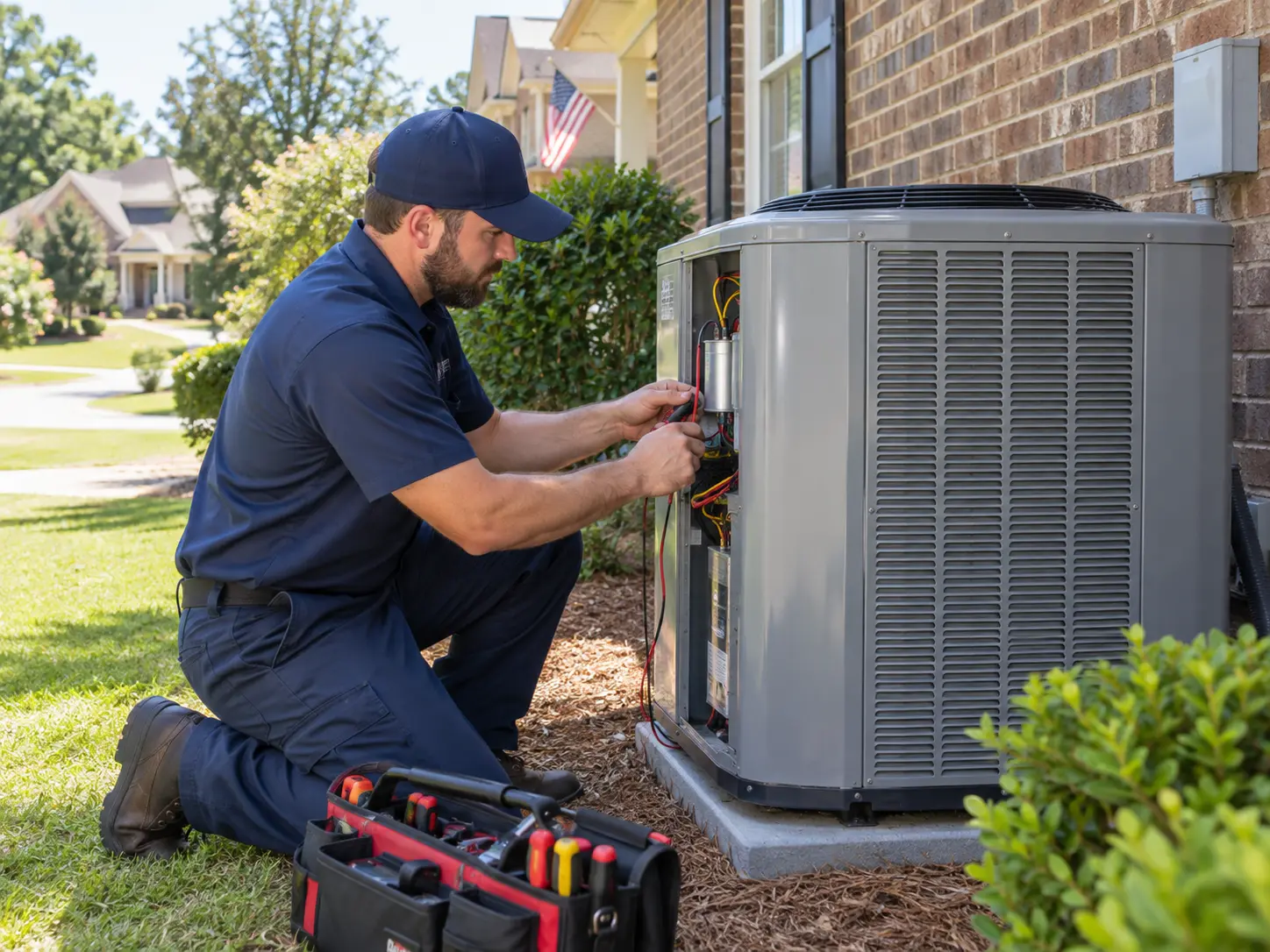
Technicians separate those possibilities with measurements: is the compressor being energized, what is the amp draw, does it draw locked-rotor amperage and trip, and are the windings within specification and not shorted to ground.
Genuine compressor failure usually has a history behind it — repeated overheating from a dirty condenser coil, operation with low refrigerant charge, chronic short cycling, or years of very long runtimes. Diagnosing that history matters, because a new compressor installed into the same conditions will fail again.
Symptoms homeowners notice
- Loud hum or buzz at the outdoor unit with no start
- The breaker trips when cooling is called for
- Sudden loud mechanical noise, then no cooling
- The outdoor fan spins while the compressor stays silent
- Cooling that quits after a few minutes and returns much later
- Noticeably hotter-than-normal discharge line temperatures
What you can safely check
- Confirm the outdoor breaker is on and the disconnect is seated
- Note exactly what you hear: silence, a hum, a click, or a loud clunk
- Check whether the outdoor fan is turning while the compressor is not
- Rinse visible debris off the outside of the condenser coil with a gentle hose spray
- Turn the system off if the breaker trips more than once
Never open electrical compartments, handle refrigerant or bypass a safety control. Those steps belong to a qualified HVAC professional.
Likely causes
Failed run or start capacitor
The most common and least expensive explanation for a compressor that hums but will not start. Capacitors degrade with heat and cycle count.
Contactor or relay failure
Pitted contacts may deliver partial voltage, which can leave the compressor drawing high current without starting.
Overheating from a dirty condenser
A restricted coil or a slow fan drives up head pressure and discharge temperature, which shortens compressor life and can cause overload trips.
Operating with low refrigerant
Refrigerant cools the compressor motor. Running low on charge means running hot, which is one of the most frequent contributors to eventual failure.
Mechanical or electrical failure inside the compressor
Seized bearings, valve damage or windings shorted to ground require compressor replacement, or replacement of the outdoor unit or full system depending on age and condition.
When professional service is needed
- Any repeated breaker trip on the condenser circuit
- A hum that lasts a few seconds and then stops
- A burning smell at the outdoor unit
- New grinding, screeching or knocking noises
- Cooling that fails only during the hottest part of the day
What a provider may inspect
- Capacitor microfarads and contactor condition
- Compressor amp draw versus rated load amps
- Winding resistance and ground fault testing
- Refrigerant pressures, superheat and subcooling
- Condenser coil cleanliness and fan motor performance
- Suction and discharge line temperatures
Montgomery-area context
Extended cooling seasons in central Alabama mean residential compressors here accumulate a lot of running hours. Keeping the outdoor coil clean and the charge correct is the practical way to protect that component.
Condensers installed close to fences, dense shrubs or under low decks recirculate their own hot discharge air. That raises operating temperatures and pressures on exactly the afternoons when the system is working hardest.
Because compressor replacement is a significant expense, system age matters in the decision. A technician can explain how remaining equipment life, refrigerant type and coil condition affect whether repair or replacement makes better sense for your home.
What About Repair Cost?
Pricing is set by each independent provider and varies with the diagnosis, the system involved, the specific component, how accessible the equipment is, parts availability and labor. Ask the provider you speak with to explain their diagnostic process and how they quote work before it begins.
Common questions
How do I know if my AC compressor is bad?
Common indicators are a loud hum without starting, a breaker that trips when cooling is called for, or a sudden mechanical noise followed by no cooling. Those symptoms overlap with capacitor and contactor failures, though, which cost far less to fix. Electrical testing is what separates a failed compressor from a compressor that simply is not being started properly.
Can a compressor be repaired instead of replaced?
Sealed residential compressors are generally replaced rather than rebuilt. That said, many compressor complaints are resolved by replacing external components — a capacitor, contactor, or fan motor — or by correcting refrigerant charge and airflow. A proper diagnosis should confirm the compressor itself is at fault before replacement is quoted.
What causes a compressor to fail early?
The usual contributors are heat and poor operating conditions: a dirty condenser coil, restricted airflow around the outdoor unit, running with a low refrigerant charge, chronic short cycling, and electrical problems that make the motor work harder than designed. Most of those are preventable with routine maintenance and prompt attention to symptoms.
Is replacing a compressor worth it on an older system?
It depends on equipment age, the refrigerant it uses, coil condition and whether other components are also nearing end of life. On a system well past a decade of heavy use, the cost can approach a meaningful share of replacement. Ask the provider to price both paths so you can compare rather than deciding from a single number.
Service Request
Request Residential AC Service
Tell us what your air conditioner is doing and your request can be shared with local residential service providers serving the Montgomery area.
Urgent AC problem?
Calling is usually the fastest way to check current residential availability, including nights and weekends.
334-835-344524/7 and same-day availability depends on participating providers, location and current technician capacity.
Don't Sit in a Hot House
If your home AC isn't cooling properly, call to check current residential service availability in Montgomery and nearby communities.
24/7 and same-day availability depends on participating providers, location and current technician capacity.