Residential AC Maintenance Checklist
Homeowners can handle filters, clearances, registers, thermostat settings, and a gentle outdoor coil rinse with power off. Everything involving panels, electrical testing, refrigerant, coil chemical cleaning and drain plumbing belongs to a qualified technician. Spring, before the first sustained heat, is the right time for professional service.
24/7 and same-day availability depends on participating providers, location and current technician capacity.
Quick answer
Homeowners can handle filters, clearances, registers, thermostat settings, and a gentle outdoor coil rinse with power off. Everything involving panels, electrical testing, refrigerant, coil chemical cleaning and drain plumbing belongs to a qualified technician. Spring, before the first sustained heat, is the right time for professional service.
What homeowners can safely do
These tasks require no tools beyond a hose and a filter, carry no electrical or refrigerant risk, and account for a meaningful share of the conditions behind summer breakdown calls.
- Replace the return filter and mark the date on the frame
- Keep two feet of clearance around the outdoor unit; trim shrubs and pull weeds
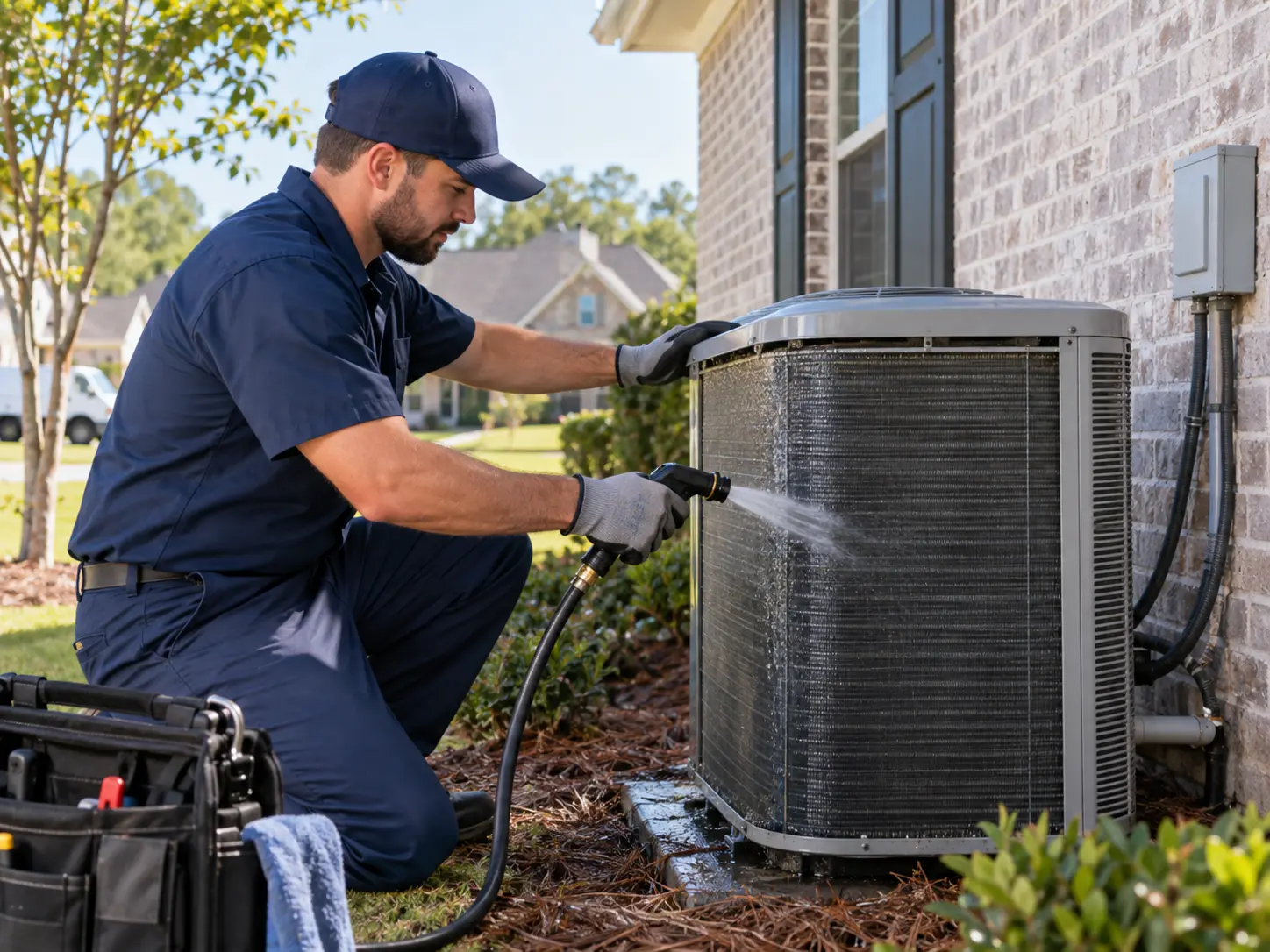
- Rinse the outdoor coil gently with a garden hose, power off at the disconnect first
- Open supply registers and keep returns unobstructed by furniture or rugs
- Confirm the thermostat is in Cool with fresh batteries and the fan on Auto
- Check that the outdoor condensate stub drips during operation
- Look at the indoor drain pan for standing water
- Listen for new noises and note when they occur
What belongs to a qualified technician
These steps require measurement, tools and training. Capacitors store a charge even with power removed, refrigerant is pressurized and regulated, and coil cleaning chemicals damage fins when misapplied.
- Measure temperature split across the coil and check static pressure
- Test capacitor microfarads, contactor condition and motor amp draw
- Verify refrigerant charge using pressures with superheat or subcooling
- Inspect and clean the evaporator and condenser coils properly
- Clear and treat the condensate drain, and test the float switch
- Inspect the blower wheel, bearings and wiring connections
- Check safety controls, low-voltage circuits and thermostat calibration
- Inspect accessible ductwork and the equipment's electrical disconnect
A seasonal rhythm that fits this climate
In a region with a long cooling season, timing matters. Professional service in spring — after pollen has mostly fallen but before sustained heat — catches restrictions and drifting electrical values before the system is asked to run continuously.
Mid-summer is the homeowner's window: check the filter more often during heavy runtime, keep the outdoor unit clear of grass clippings, and watch for the early signs of decline rather than waiting for a complete failure.
- Early spring: schedule professional service, replace the filter, clear the outdoor unit
- Summer: check the filter monthly, keep the condenser clear, watch for weak airflow or ice
- Fall: replace the filter, clear leaves from the outdoor unit
- Winter: keep the unit clear of debris; never cover a heat pump, which runs in winter
Why maintenance pays off here
Most residential cooling failures are not sudden. Filters load gradually, coils foul gradually, capacitor values drift, drain lines narrow with biofilm across a season. Maintenance is the practice of catching those trends while they are still cheap.
It also gives you a documented picture of how your system is performing, which is genuinely useful when a larger repair decision arrives and you need to weigh repair against replacement.
Safety boundaries worth respecting
Do not remove electrical panels, test electrical components, add or recover refrigerant, disassemble drain plumbing at the air handler, chip ice off a coil, or reset a breaker repeatedly. Those steps carry real risk of injury or equipment damage.
If you smell burning, see scorched wiring, or a breaker will not stay reset, leave the power off and have it inspected before running the system again.
Related questions
How often should a home AC be professionally serviced?
Once a year before cooling season is the common recommendation for cooling-only systems. Heat pumps run in both seasons and are often serviced twice a year, since the same components work year-round. In a long cooling season, annual service is worth treating as a minimum rather than an optional extra.
Can I clean the outdoor coil myself?
A gentle rinse is reasonable. Shut power off at the outdoor disconnect, clear debris from around the cabinet, and spray with a garden hose from the outside of the coil inward. Avoid pressure washers, avoid chemical coil cleaners, and leave panel removal and internal cleaning to a technician.
Does maintenance lower my energy bills?
Restoring airflow, clean coils and correct charge generally improves efficiency compared with a neglected system, and it reduces breakdown risk. The size of any savings depends on how degraded the system was, your home, your ductwork and your usage, so treat specific percentage claims cautiously — the reliability benefit is the more reliable payoff.
Should I cover the outdoor unit in winter?
Full covers trap moisture and can attract pests, and if your system is a heat pump it operates in winter and must not be covered at all. Keeping leaves and debris cleared away is more useful. A gentle coil rinse before cooling season does more good than any cover.
Is a maintenance plan or agreement necessary?
Not required. Some homeowners find scheduled visits convenient; others simply book service each spring. Terms, inclusions and pricing come from each independent provider, and this site does not set or guarantee them. Read what is actually included before signing anything.
Service Request
Request Residential AC Service
Tell us what your air conditioner is doing and your request can be shared with local residential service providers serving the Montgomery area.
Urgent AC problem?
Calling is usually the fastest way to check current residential availability, including nights and weekends.
334-835-344524/7 and same-day availability depends on participating providers, location and current technician capacity.
Don't Sit in a Hot House
If your home AC isn't cooling properly, call to check current residential service availability in Montgomery and nearby communities.
24/7 and same-day availability depends on participating providers, location and current technician capacity.