
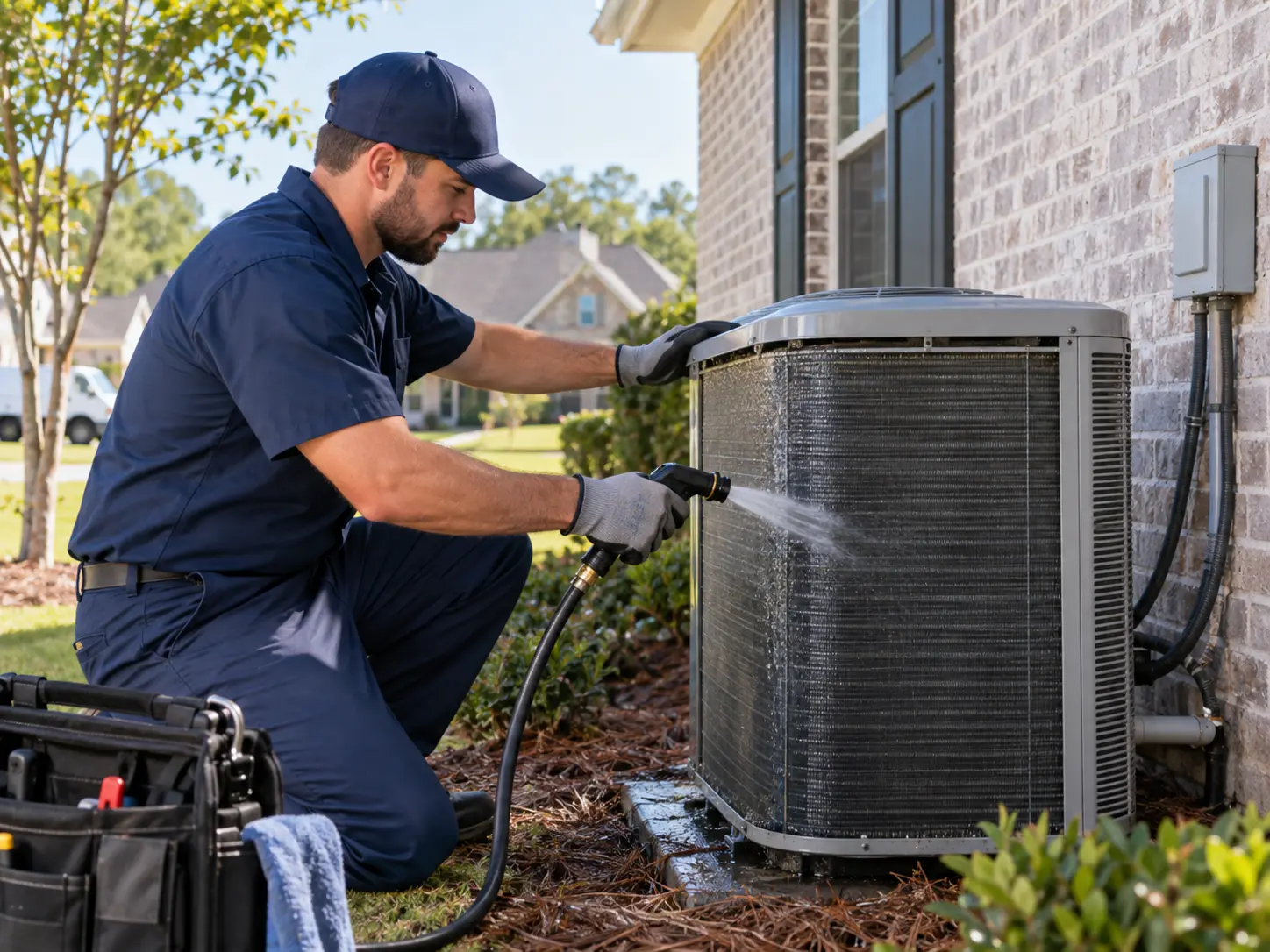
Is Water From My AC Drain Normal?
A home air conditioner removes water from indoor air as it cools, and that condensate has to leave through a designated drain. Water dripping steadily from the drain outlet is normal, and more of it during humid weather is also normal. Water anywhere the system is normally dry — around the air handler, in a ceiling, on flooring — points to a restricted line, a blocked trap, a dirty coil, a damaged pan, poor drainage or a thawing frozen coil.
24/7 and same-day availability depends on participating providers, location and current technician capacity.
Quick answer
A home air conditioner removes water from indoor air as it cools, and that condensate has to leave through a designated drain. Water dripping steadily from the drain outlet is normal, and more of it during humid weather is also normal. Water anywhere the system is normally dry — around the air handler, in a ceiling, on flooring — points to a restricted line, a blocked trap, a dirty coil, a damaged pan, poor drainage or a thawing frozen coil.
How a residential AC produces condensate
Cooling is heat movement. Warm, moist indoor air passes over the cold evaporator coil, gives up heat, and the water vapor it carried condenses on the coil surface — the same way a cold glass sweats on a summer afternoon.
That water runs down the coil into a drain pan, then out through a condensate line, usually to the outside of the house or to a plumbing drain. Some systems add a condensate pump when gravity drainage is not possible, and most have a float switch designed to shut cooling off before water overflows.
On a humid day a residential system can remove a surprising volume of water. That is not a malfunction — it is the dehumidification half of the job, and it is exactly why the drain path matters so much here.
What is normal
Normal drainage is undramatic and stays in the drain path. If you know where your outdoor drain outlet is, it is worth looking at it during a hot afternoon so you know what your system's normal looks like.
- Water leaving steadily from the designated drain outlet while the system runs in cooling
- Noticeably more condensate during very humid weather or long run cycles
- A damp patch on the ground below the outdoor drain stub
- A condensate pump cycling occasionally with a brief discharge
- A dry drain pan, because water is moving through rather than collecting
What may indicate a problem
The pattern to watch for is simple: water where the system is normally dry. Any of the following deserves attention, and several of them can cause building damage quickly.
- Water on the floor around the air handler or in the equipment closet
- An overflowing or standing-full drain pan
- Water stains or discoloration on a ceiling or wall below or beside the equipment
- A musty smell, especially at startup
- Repeated float-switch shutdowns — cooling stops, then works again later
- Wet flooring, damp carpet or bubbling paint near ductwork or the air handler
- No water at all from the outdoor drain on a humid day when the system is running hard
Possible causes
Drainage problems are usually mechanical and physical rather than electronic, which is why a technician can often confirm them quickly once they have access.
- Clogged condensate line, commonly from biological growth, dust and debris
- Blocked drain trap, or a trap that has dried out and lost its seal
- Dirty evaporator coil shedding debris into the pan and restricting the drain
- Poor drainage from a line that is too long, sagging or terminating badly
- Damaged, cracked or rusted drain pan
- A frozen coil thawing and releasing more water than the pan can carry
- Improper slope, so water sits in the line instead of flowing out
- Safety switch activation shutting the system off as designed once water backs up
- A failed condensate pump, or a pump discharge line that is blocked
Why Montgomery Homeowners Should Pay Attention to AC Drainage
In warm, humid central Alabama weather, residential systems run for long stretches and spend a substantial share of that runtime removing moisture from indoor air. More moisture removal means more condensate moving through the drain, day after day, for months.
A drain path that is marginal — slightly restricted, poorly sloped, or overdue for cleaning — often keeps up in mild weather and fails during exactly the conditions that produce the most water. That is why drainage complaints tend to cluster in the middle of the cooling season rather than at its edges.
Sustained moisture also encourages the biological growth that clogs drain lines in the first place. Keeping the drain clear is one of the routine items that prevents a comfort problem from turning into a water-damage problem.
What homeowners can safely check
These checks are visual and require no disassembly. Anything that involves taking apart drain plumbing at the air handler, opening electrical compartments or working on the coil belongs to a qualified professional.
- If water is actively spreading, turn cooling off at the thermostat to stop condensate production
- Look for standing water in the drain pan and on the floor around the equipment
- Check whether the outdoor drain outlet is dripping while the system runs
- Look for ice on the coil or the larger refrigerant line, which changes the situation
- Check the filter, since restricted airflow contributes to freezing and to coil fouling
- Protect flooring and belongings from further water while you arrange service
What a technician may inspect
Clearing a drain is often straightforward for someone with the right access and equipment. Confirming why it clogged, and whether the pan and slope are sound, is the part that prevents a repeat.
- Condensate line, trap and termination, cleared and flow-tested
- Drain pan condition and secondary pan if one is present
- Float switch and safety control operation
- Evaporator coil and blower wheel condition
- Drain slope and routing
- Condensate pump operation, where applicable
- Airflow and refrigerant charge if freezing was involved
Water symptom, and what it may point toward
| What you notice | Possible areas to investigate | What to do next |
|---|---|---|
| Water around the air handler | Drain line, trap, pan, coil condition | Turn cooling off, protect flooring, arrange inspection |
| Ceiling or wall staining | Overflow above the finished space, pan, secondary drain | Turn cooling off and arrange prompt inspection |
| Cooling stops then resumes later | Float switch tripping on a backed-up drain | Arrange inspection rather than resetting repeatedly |
| No drip outdoors on a humid day | Blocked line, blocked trap, or no cooling occurring | Confirm the system is cooling, then arrange inspection |
| Water plus ice on the coil | Airflow restriction, refrigerant, thawing melt water | Turn cooling off, allow thawing, arrange diagnosis |
Warning signs to take seriously
- Water reaching ceilings, walls, flooring or stored belongings
- An overflowing drain pan or a float switch that trips repeatedly
- Visible mold or mildew near the equipment, ducts or affected building materials
- Water near electrical components or wiring at the air handler
- Ice on the coil together with active water leakage
Related questions
How much water should come out of my AC drain line?
There is no single correct number, because it depends on how humid the air is, how long the system runs and how much moisture your household generates. A steady drip or trickle from the outdoor drain outlet while the system cools is normal, and it increases in humid weather. What matters is that the water leaves through the intended path. Water appearing anywhere else is the problem worth acting on.
Can I pour bleach down the drain line myself?
Home remedies circulate widely, but they can damage some components and they do not address a line that is already blocked, a dry trap, a cracked pan or improper slope. Clearing and treating a condensate drain properly is a routine part of professional maintenance. If the drain is currently backing up, the useful step is turning cooling off and arranging service rather than experimenting.
Why does my AC shut off and then start working again hours later?
That pattern is very often a float switch doing its job. Water backs up, the switch interrupts cooling to prevent overflow, the level eventually drops and cooling resumes. The system is protecting your ceiling, not misbehaving. The underlying restriction is still there and will keep tripping the switch until the drain path is cleared and checked.
Is a little water around the outdoor unit normal?
Some moisture around the outdoor unit is expected during cooling, and heat pumps also shed water when they defrost in cold weather. Persistent pooling, or water that appears where you have never seen it before, is worth mentioning. The indoor side is where drainage problems usually cause damage, so that is the area to inspect first.
Could a frozen coil be causing my water leak?
Yes, and it is a common combination. Ice on the coil melts faster than the pan and drain can carry away, so a freeze often shows up first as water on a floor. If you see ice, turn cooling off and let the system thaw completely before anything else. Then treat the freeze as its own diagnosis, because airflow or refrigerant is usually behind it.
How often should the drain be serviced?
Clearing and treating the condensate drain is a standard item in seasonal professional maintenance, and in a long, humid cooling season that annual attention is worth having. Homes with a history of drain clogs sometimes benefit from more frequent checks. Ask the provider what they found in the line, since that tells you how quickly it is accumulating.
Related AC Problems
Service Request
Request Residential AC Service
Tell us what your air conditioner is doing and your request can be shared with local residential service providers serving the Montgomery area.
Urgent AC problem?
Calling is usually the fastest way to check current residential availability, including nights and weekends.
334-835-344524/7 and same-day availability depends on participating providers, location and current technician capacity.
Don't Sit in a Hot House
If your home AC isn't cooling properly, call to check current residential service availability in Montgomery and nearby communities.
24/7 and same-day availability depends on participating providers, location and current technician capacity.