
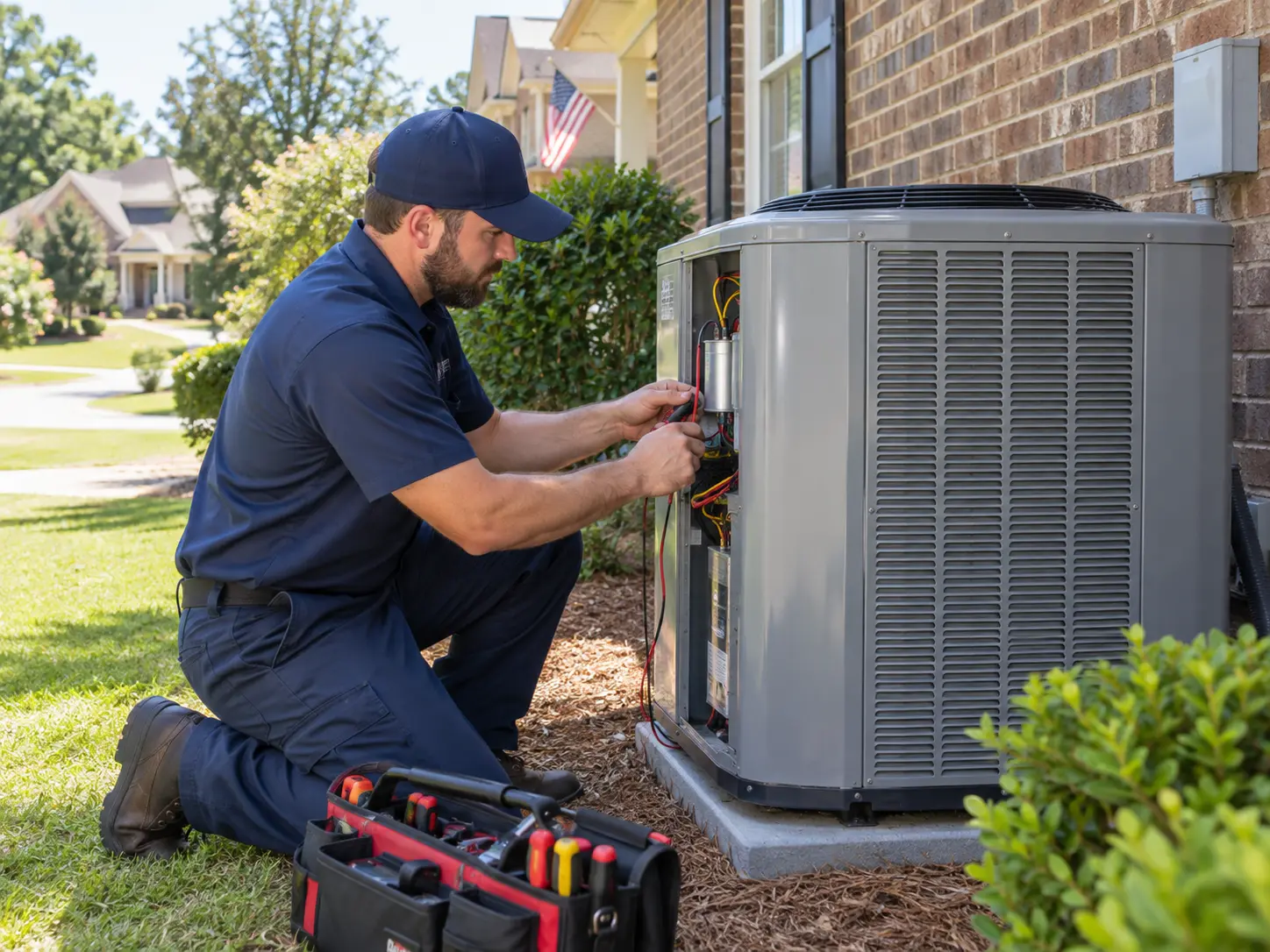
AC Repair vs Replacement: How to Decide
There is no single formula that answers this. Repair generally makes sense when the failure is contained, the system is not very old, the breakdown looks isolated, the part is readily serviceable and comfort has otherwise been acceptable. Replacement deserves more consideration when breakdowns repeat, a compressor has failed, a major refrigerant leak exists, the equipment is very old, comfort is poor, electric usage has climbed, parts are hard to source, or several major components are failing at once.
24/7 and same-day availability depends on participating providers, location and current technician capacity.
Quick answer
There is no single formula that answers this. Repair generally makes sense when the failure is contained, the system is not very old, the breakdown looks isolated, the part is readily serviceable and comfort has otherwise been acceptable. Replacement deserves more consideration when breakdowns repeat, a compressor has failed, a major refrigerant leak exists, the equipment is very old, comfort is poor, electric usage has climbed, parts are hard to source, or several major components are failing at once.
Start with the age of the equipment
Residential cooling equipment in a long-season climate typically delivers somewhere in the range of ten to fifteen years of service, and heat pumps that run year-round often land at the lower end of that range. Age alone does not condemn a system, but it changes the arithmetic on every repair decision.
Under about ten years, a well-maintained system with one clear failure is usually worth repairing. Past twelve to fifteen years, each significant repair is an investment in equipment with limited remaining life, and the next failure may not be far behind.
What kind of failure is it?
There is a meaningful difference between replaceable external components and sealed-system failures. A capacitor, contactor, thermostat, drain line or condenser fan motor is a contained repair on almost any system, at almost any age.
A failed compressor, a leaking evaporator coil, or a leak in the line set is a different category. Those repairs are substantial on their own, and on older equipment they often arrive alongside other worn components.
- Minor and contained: capacitor, contactor, thermostat, drain, fan motor
- Moderate: blower motor, control board, metering device, refrigerant leak repair
- Major: compressor, evaporator coil, line set replacement
Refrigerant type matters
Older residential systems use R-22, which has been phased out of production. Repairs requiring refrigerant on those systems get progressively more expensive and less practical over time, which pushes older R-22 equipment toward replacement even for otherwise moderate repairs.
Ask the technician which refrigerant your system uses. It is one of the most decision-relevant facts available and it is easy to confirm from the equipment data plate.
Repair history and reliability
One repair is an event. Three repairs in two seasons is a pattern, and patterns usually reflect general wear rather than isolated bad luck. Keep a simple record of what has been replaced and when — it is the most useful input you can bring to the decision.
Systems that have needed refrigerant added more than once have a leak that was never resolved, and that history should weigh toward replacement on older equipment.
Comfort and efficiency, not just cost
If some rooms never cool properly, if the house feels humid even at setpoint, or if the system runs constantly through July, those are comfort problems that a single repair may not solve. Duct condition and equipment sizing are part of that picture and are worth discussing.
Newer equipment is generally more efficient than a system installed ten to fifteen years ago, and variable-speed options handle humidity better. Any specific savings estimate depends on your home, your ductwork, your usage and the equipment chosen, so treat vague percentage claims with skepticism and ask for reasoning tied to your house.
Questions to ask before you decide
A good conversation with a provider covers diagnosis, options and reasoning rather than a single number. You are entitled to understand what failed, why, and what the alternatives are.
- What exactly failed, and what caused it?
- How old is the system, and what refrigerant does it use?
- Is this a sealed-system repair or an external component?
- What else did you find that is near the end of its life?
- What is the written cost for the repair, and for replacement options?
- If we repair it now, what is the realistic outlook for the next few seasons?
A note on costs
Repair and replacement pricing varies by provider, system type and size, component, accessibility, parts availability and labor. This site does not set, quote or guarantee pricing, and no honest guide can give you a number without seeing your system.
What you can do is ask for written options, get a second quote on major work, and make sure any comparison covers the same scope — equipment, installation, ductwork and any code-required work included.
A decision matrix rather than a formula
Simple universal rules circulate widely — comparing a repair quote against a fixed share of replacement cost, or multiplying repair cost by system age. They are memorable, but they compress a multi-factor decision into one number and frequently point the wrong way. A ten-year-old system with a failed capacitor and a twenty-year-old system with a failed compressor are not the same situation even if the arithmetic happens to line up.
A more useful approach is to look at which side of the following two lists your situation actually falls on, and how many items on each list apply.
Repair may make sense when
- The issue is relatively minor rather than a sealed-system failure
- The system is not very old for its type and duty
- The breakdown appears isolated rather than part of a pattern
- The part is readily serviceable and available
- Comfort and efficiency have otherwise been acceptable
- The equipment has been maintained and has no history of refrigerant top-offs
- Remaining manufacturer warranty covers part of the work
Replacement deserves more consideration when
- Repeated breakdowns have occurred over recent seasons
- The compressor has failed
- A major refrigerant leak exists, particularly in a coil or line set
- The equipment is very old for its type and operating hours
- Comfort is poor — rooms that never cool, or persistent indoor humidity
- Electric usage has increased without another explanation
- Parts availability is difficult for the model or the refrigerant
- Multiple major components are failing or near the end of their life
What the decision actually depends on
Rather than a single threshold, weigh these factors together. Any one of them can dominate: an unavailable part or an obsolete refrigerant can settle the question regardless of what a percentage calculation suggests.
- Age of the equipment, and its accumulated operating hours
- Overall condition of the system, including coils, blower and electrical components
- The type of repair — contained component versus sealed-system work
- Refrigerant type and how practical it is to service
- Efficiency, and whether operating cost has been climbing
- Comfort performance: room-to-room balance and humidity control
- Remaining warranty coverage on parts or labor
- Expected future repairs based on what else the technician found
- Replacement cost, including ductwork and installation scope
Why the percentage rules fall apart
A repair on a young, otherwise healthy system can be worth doing even when it is not cheap, because it buys many remaining seasons. The same repair on very old equipment with a history of failures may not be worth doing even if it is inexpensive, because the next failure is likely close behind.
Ask instead: what failed, why, what else is worn, what refrigerant does this system use, and what is the realistic outlook for the next few seasons? A provider who answers those questions clearly is giving you far more than a threshold percentage ever could.
Weighing a repair against replacement
| Factor | Leans toward repair | Leans toward replacement |
|---|---|---|
| Failure type | Contained external component | Compressor, coil or line set |
| Age and hours | Not very old for its type | Very old, or heavy year-round runtime |
| Repair history | First problem in years | Repeated breakdowns across seasons |
| Refrigerant | Current and readily serviceable | Obsolete or costly to service |
| Parts | Readily available | Difficult to source for the model |
| Comfort | Home has cooled and dehumidified well | Rooms never cool, or humidity stays high |
| Operating cost | Stable usage | Electric usage rising without explanation |
| Component condition | Everything else in good shape | Several major components near end of life |
Related questions
Is there a simple rule for repair versus replacement?
Rules of thumb circulate, such as comparing repair cost against a share of replacement cost or multiplying repair cost by system age. They are starting points, not answers. Age, refrigerant type, failure category, repair history and how well the system has performed for comfort all belong in the decision, and a provider who explains their reasoning is more useful than any formula.
My system is 15 years old but working. Should I replace it proactively?
Not necessarily. A well-maintained system that is still cooling adequately can keep running. What is worth doing is planning: know the refrigerant type, keep up with maintenance, and decide in advance what failure would tip you toward replacement rather than making that call during a heat wave.
Can I replace just the outdoor unit?
Mixing new and old components is generally discouraged because the indoor coil, metering device and outdoor unit are designed to work as a matched set. A mismatch can reduce capacity and efficiency, and refrigerant differences may make it impossible. Ask the provider to explain compatibility for your specific equipment before agreeing to a partial replacement.
Does adding refrigerant every year mean I need a new system?
It means you have a leak that has not been repaired. Whether to fix the leak or replace depends on where it is: a fitting or accessible line is often repairable, while a leaking evaporator coil or line set on older R-22 equipment frequently points toward replacement. Repeated top-offs without leak location is not a maintenance plan.
Should I get more than one opinion on major work?
For compressor, coil or full replacement decisions, yes. A second diagnosis and quote is normal practice on work of that size. Make sure both quotes describe the same scope so the comparison is meaningful, and confirm license and insurance for any contractor you consider hiring.
Service Request
Request Residential AC Service
Tell us what your air conditioner is doing and your request can be shared with local residential service providers serving the Montgomery area.
Urgent AC problem?
Calling is usually the fastest way to check current residential availability, including nights and weekends.
334-835-344524/7 and same-day availability depends on participating providers, location and current technician capacity.
Don't Sit in a Hot House
If your home AC isn't cooling properly, call to check current residential service availability in Montgomery and nearby communities.
24/7 and same-day availability depends on participating providers, location and current technician capacity.